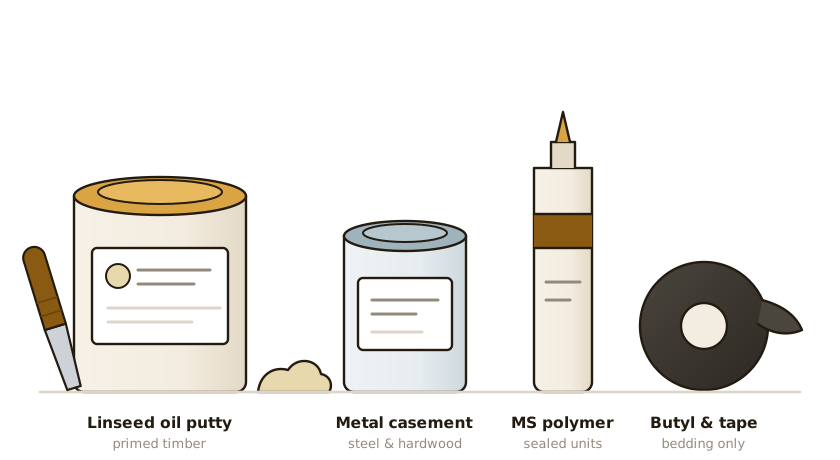
Linseed oil putty
Whiting + linseed oil · natural or brown
The traditional material and the right answer for almost any single-glazed timber window. UK products still follow the recipe set out in BS 544:1969, the withdrawn but still-quoted British Standard for linseed oil putty in wooden frames.
It cures by oxidation rather than drying, so it needs air, warmth and — critically — a primed rebate that won't drink its oil. Expect roughly 3–5 metres of fronting per kilogram. Its great virtue is repairability: a fillet can be cut back and re-faced in patches, indefinitely, for as long as the joinery lasts.
Never: on sealed units, directly against laminated glass, or in a bead-glazed system.
Metal casement putty
For non-absorbent frames · primed steel, dense hardwood
Same idea, different oil blend. Ordinary putty part-relies on the frame absorbing a little oil to start curing at the back; steel absorbs none, so a timber putty can stay soft and greasy against metal for months. Metal casement putty is formulated to set without that help — the standard choice for Crittall-type steel casements.
The frame still has to be sound, rust-free and primed. Putty applied over rust lifts with the rust, usually inside a year. Working range is about +5 °C to +30 °C, the same as timber putty.
MS-polymer putty replacements
Gun-applied · permanently elastic · overpaintable the same day
Modified-silane sealants tooled to a putty-like bevel. Repair Care's Dry Seal MP is the reference product in the UK; it cures in hours, stays flexible, and — the decisive difference — is tested as compatible with laminated glass, sealed double-glazed units and slim heritage units, none of which tolerate linseed oil.
The trade-offs are a much higher cost per metre, one-shot application (no re-working once it skins), and appearance: on a listed façade, a knifed linseed fillet is what a conservation officer expects to see. It is a trade product — a decorators' merchant is a more reliable source than a marketplace.
Butyl and glazing tape
Non-setting · for bedding, not fronting
Pre-formed strips and non-hardening compounds used to bed sealed units and glass into bead-glazed frames. They never cure, so they absorb movement indefinitely and stay watertight — but they cannot be knifed to a crisp arris and are not a visible finish. Tape is the normal way a modern double-glazed sash is bedded before the bead goes back on.
Silicone and acrylic compounds
Useful in their place · wrong on a period window
Neutral-cure silicone is a proper bedding material for sealed units. It is not a putty substitute: it can't be knifed sharp and paint won't adhere to it, so a silicone "fillet" on a traditional window looks wrong immediately and stays wrong. Water-based acrylic glazing compounds skin and paint fast but shrink as the water leaves and have a much shorter outdoor life. Fine as a stop-gap on a shed; a false economy on joinery you care about.
What about leaded lights?
Stained glass and leaded lights are not puttied — they are cemented. Leaded-light cement is a thinner, brushable compound worked under the leaves of the cames on both faces and then dusted back with whiting. Ordinary glazing putty is far too stiff for the job and will not key under the lead. Different material, different technique, same family.